
I've had the same idea about the hole in the piston, Jade. And I don't think the hole would need to be as precise as you think. If you pull the trigger on a normal automag, you'll notice that the marker fires before the trigger bottoms out. So there's some play there. As long as the piston o-ring hits the hole after the marker fires, it should vent the air inside (or at least most of the air inside so the sear can reset).
The bigger issue is stopping the air coming into the piston. You want the air to be delivered as a pulse, so when it vents out the hole, there's no air left inside the piston (or very little) to stop the sear from resetting. Pneumag designs don't do this, though. The air is either on, or it's off. And when it's on, it won't matter if there's a vent. It would be like a pinhole in the side of a bucket trying to drain while you're filling the bucket from a hose at the same time. If you made the vent hole bigger than the air inlet hole, then maybe it could work. But that would be a pretty big hole (larger than 1/8" probably). At that point, it's possible that the escaping air could eventually deform the o-ring that's passing back and forth over the hole.
So yeah, the vent hole is a step in the right direction, but I think it needs to work in tandem with a pulse of air.
(I thought your long post was fine, but the way. This is a pretty complicated idea. It's not going to be solved with short posts.)
The bigger issue is stopping the air coming into the piston. You want the air to be delivered as a pulse, so when it vents out the hole, there's no air left inside the piston (or very little) to stop the sear from resetting. Pneumag designs don't do this, though. The air is either on, or it's off. And when it's on, it won't matter if there's a vent. It would be like a pinhole in the side of a bucket trying to drain while you're filling the bucket from a hose at the same time. If you made the vent hole bigger than the air inlet hole, then maybe it could work. But that would be a pretty big hole (larger than 1/8" probably). At that point, it's possible that the escaping air could eventually deform the o-ring that's passing back and forth over the hole.
So yeah, the vent hole is a step in the right direction, but I think it needs to work in tandem with a pulse of air.
(I thought your long post was fine, but the way. This is a pretty complicated idea. It's not going to be solved with short posts.)


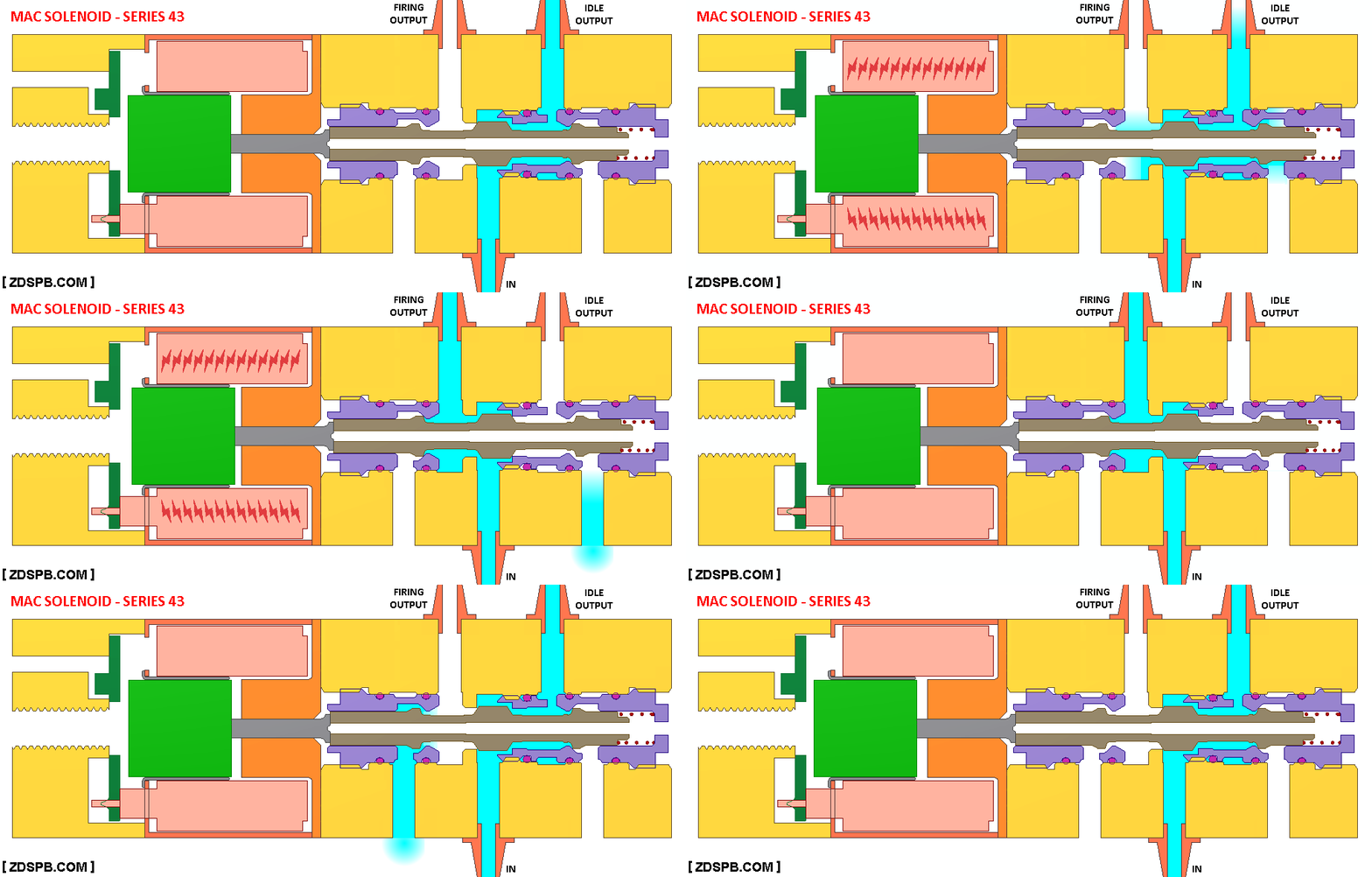


 Works great.
Comment