
 My better reactive trigger explanation and something to look for on your RT
Secretweaponevan asked a different question the other day; "why does the RT have a reactive trigger?". Usually the question is "how can I get my RT to RT?", the answer to which is usually some combination of higher pressure, clean regulators and shorter on/off pins.
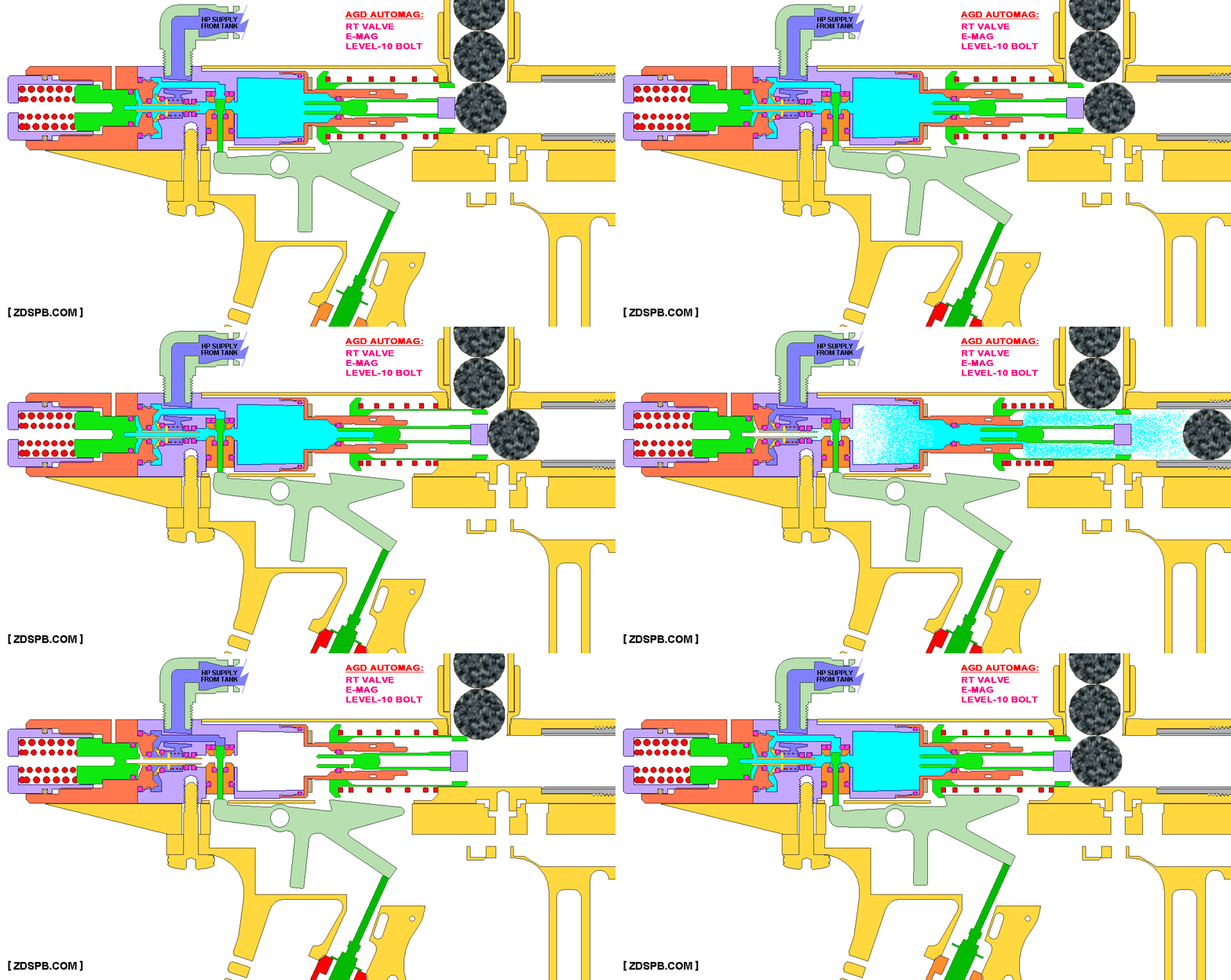
I had always assumed that it had to do with the RT effect, since the valve was named "RT" and the RT effect increases as you increase the input pressure. That worked out just like they say assumptions work. Being unable to connect the reactive trigger with the "RT effect", I had to start over with the movie on zdspb.com and the diagrams.
It looks to me that the "RT effect" as described in the RT chronograph procedure is just a side effect of the very fast charge of the regulator. I think Tom designed the reactive trigger first and found the "RT effect" as a result. I would be happy to hear if I am wrong or right.
The reactive trigger on the RT valve is the result of the jet of gas across the bottom side of the on/off pin. The velocity on the jet is high enough to create suction and entrainment of gas over the top of the pin and push down on it. This design is similar to an eductor, which uses a jet to provide suction on a stream perpendicular to the jet flow. Faucet attachments for draining water beds are similar.

For the time that the reg is recharging through the reg pin, the jet is pulling gas down. When the reg pin closes off, the jet stops and you are left with near normal pressure on the on/off pin which you should be less than what you would be applying if you try to take up the force on the pin from the pressure and the jet flow suction. The force on the pin from the jet varies directly with the velocity of the jet, which comes from the input pressure.
**^probably not^**
So besides keeping your reg clean so that the reg piston and reg pin can move fast, check that your RT on/off ports are lined up with your valve. I think this is why AGD started to use the square base on the RT on/off, to keep a pair the ports aligned with the reg pin. I've had a RT top that would come loose and rotate out of alignment. If that happened in an RT valve, it would greatly reduce the reactive trigger forces.
I had always assumed that it had to do with the RT effect, since the valve was named "RT" and the RT effect increases as you increase the input pressure. That worked out just like they say assumptions work. Being unable to connect the reactive trigger with the "RT effect", I had to start over with the movie on zdspb.com and the diagrams.
It looks to me that the "RT effect" as described in the RT chronograph procedure is just a side effect of the very fast charge of the regulator. I think Tom designed the reactive trigger first and found the "RT effect" as a result. I would be happy to hear if I am wrong or right.
The reactive trigger on the RT valve is the result of the jet of gas across the bottom side of the on/off pin. The velocity on the jet is high enough to create suction and entrainment of gas over the top of the pin and push down on it. This design is similar to an eductor, which uses a jet to provide suction on a stream perpendicular to the jet flow. Faucet attachments for draining water beds are similar.
For the time that the reg is recharging through the reg pin, the jet is pulling gas down. When the reg pin closes off, the jet stops and you are left with near normal pressure on the on/off pin which you should be less than what you would be applying if you try to take up the force on the pin from the pressure and the jet flow suction. The force on the pin from the jet varies directly with the velocity of the jet, which comes from the input pressure.
**^probably not^**
So besides keeping your reg clean so that the reg piston and reg pin can move fast, check that your RT on/off ports are lined up with your valve. I think this is why AGD started to use the square base on the RT on/off, to keep a pair the ports aligned with the reg pin. I've had a RT top that would come loose and rotate out of alignment. If that happened in an RT valve, it would greatly reduce the reactive trigger forces.


 Only the reg piston discharge comes across the bottom of the pin top, which is too early and short to reset the trigger.

Comment