
I'm not actually a roundtable member, but I figured this would still hold value  . I am, as a few of you know, currently in the process of disproving some of the claims stated by the manufacturer of the 'Equalizer' board for the Intimidator. The claims that I am particularly focused on, and the method I plan to use do do so are listed as follows.
At the heart of several of the following claims is his statement that the stock intimidator board has many hardware flaws. So, for testing purposes, I intend to use a purely stock board. The only hitch is that the stock chip used is a PIC 16c77 chip, which is one time programmable. as such, I plan on removing the 16c77 and replacing it with an 18f442 chip. Basically, the differences between this and the 16c77 are -
1) it is flash - infinitely (almost) reprogrammable.
2) it includes an eeprom memory bank, allowing storage of information from one power cycle to the next, without being permanantly written into the flash. (saved settings, basically) This noninclusion of eeprom is the one signifigant hardware flaw that has been universally conceded... I've said it for a while
3) It generally includes more of any given type of memory.
According to the datasheets, other than the differences listed, there are no signifigant differences between the two microcontrollers. As such, I feel that the changing of the micro should not adversely affect the validity of these test results. I chose this particular chip because it was pin-for-pin compatible with the 16c77, used flash memory, and was available at digikey (seems they don't stock many tqfp-44 PIC's with flash memory). The eeprom and higher memory capacities were just 'perks'. If there is a flaw in my logic, please point it out!
Next, I intend to write for this modified board a software package I've taken to calling the 'Free Ware Airgun Software' (heh). It will be completely open source, written 100% in PIC assembly. One important note here is that when I say open source, it is taken as a bad thing because it allows users access to the code for the markers. Fortunately, that is not really much of a concern here, as I will only be doing a few of these boards for testing purposes, and as the software will be written specifically for them, it will serve no purpose to someone without a board or the skills to modify theirs themselves... And if one has the skills and experience to safely remove a TQFP 44 pin chip and replace it with another, they most likely have the skills to write their OWN software, without my help Back to the topic, though, I intend to make it open source so that it will be clearly visible and verifiable that there is no form of software compensation for the hardware 'shortcomings' that are being claimed. Also, I'm somewhat scatterbrained, so it's quite possible that I could miss/forget/etc. something, and this will give anyone who knows PIC asm a chance to 'check my work', if you will
Finally, the claims I hope to disprove with this experiment (these are all paraphrased from memory, so if I misstate one of them, correct me )
"The intimidator has shootdown, caused by hardware flaws in the stock board, when fired in long strings in excess of 14bps."
I plan to disprove this by using software capable of running in full auto at higher rates of fire (I figure 18bps would be a good place to start?) and map out the chrono readings for 50 shot strings. Obviously, there is likely to be some shootdown in these readings, but my hypothesis here is that it will not be overwhelming, and it will primarily be attributable to the air system. To support the second part of that, in the same marker (plug/unplug), I would like to do the same with an equalizer board.
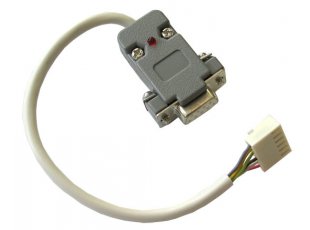
Progress: I have 3 boards prepped for 'surgery', the chips have been safely removed from all of them. New chips will be here, according to UPS tracking, this afternoon sometime, and I'll get to reinstalling the chips then. I have all the parts for my programming cables here, and these should take very little time to construct. I also have a freeware ISP software package I plan to use for the programming. I have mapped out each microcontroller pin & function, and have a basic structure for my software written.
Limitations & obstacles: I'm still learning PIC asm (curse bob for not using AVR's, they're definitely superior chips .. Hooray for the e-mag, great choice, AGD! ), but it's not dissimilar at all to 8051 or AVR asm, so it's more or less just converting equivalent instructions. I don't have a computer chrono, so I am hoping to come across a volunteer willing to actually perform this test. I also don't have an eq board... And REALLY don't want to buy one if I don't have to... So, hopefully either the first volunteer would have his own, or there would be another volunteer willing to provide an EQ board. If not, we can at least show that the shootdown in the stock hardware is not what's claimed.
Anyway, any thoughts, ideas, suggestions? Let me know.
. I am, as a few of you know, currently in the process of disproving some of the claims stated by the manufacturer of the 'Equalizer' board for the Intimidator. The claims that I am particularly focused on, and the method I plan to use do do so are listed as follows. At the heart of several of the following claims is his statement that the stock intimidator board has many hardware flaws. So, for testing purposes, I intend to use a purely stock board. The only hitch is that the stock chip used is a PIC 16c77 chip, which is one time programmable. as such, I plan on removing the 16c77 and replacing it with an 18f442 chip. Basically, the differences between this and the 16c77 are -
1) it is flash - infinitely (almost) reprogrammable.
2) it includes an eeprom memory bank, allowing storage of information from one power cycle to the next, without being permanantly written into the flash. (saved settings, basically) This noninclusion of eeprom is the one signifigant hardware flaw that has been universally conceded... I've said it for a while
3) It generally includes more of any given type of memory.
According to the datasheets, other than the differences listed, there are no signifigant differences between the two microcontrollers. As such, I feel that the changing of the micro should not adversely affect the validity of these test results. I chose this particular chip because it was pin-for-pin compatible with the 16c77, used flash memory, and was available at digikey (seems they don't stock many tqfp-44 PIC's with flash memory). The eeprom and higher memory capacities were just 'perks'. If there is a flaw in my logic, please point it out!
Next, I intend to write for this modified board a software package I've taken to calling the 'Free Ware Airgun Software' (heh). It will be completely open source, written 100% in PIC assembly. One important note here is that when I say open source, it is taken as a bad thing because it allows users access to the code for the markers. Fortunately, that is not really much of a concern here, as I will only be doing a few of these boards for testing purposes, and as the software will be written specifically for them, it will serve no purpose to someone without a board or the skills to modify theirs themselves... And if one has the skills and experience to safely remove a TQFP 44 pin chip and replace it with another, they most likely have the skills to write their OWN software, without my help Back to the topic, though, I intend to make it open source so that it will be clearly visible and verifiable that there is no form of software compensation for the hardware 'shortcomings' that are being claimed. Also, I'm somewhat scatterbrained, so it's quite possible that I could miss/forget/etc. something, and this will give anyone who knows PIC asm a chance to 'check my work', if you will
Finally, the claims I hope to disprove with this experiment (these are all paraphrased from memory, so if I misstate one of them, correct me )
"The intimidator has shootdown, caused by hardware flaws in the stock board, when fired in long strings in excess of 14bps."
I plan to disprove this by using software capable of running in full auto at higher rates of fire (I figure 18bps would be a good place to start?) and map out the chrono readings for 50 shot strings. Obviously, there is likely to be some shootdown in these readings, but my hypothesis here is that it will not be overwhelming, and it will primarily be attributable to the air system. To support the second part of that, in the same marker (plug/unplug), I would like to do the same with an equalizer board.
Progress: I have 3 boards prepped for 'surgery', the chips have been safely removed from all of them. New chips will be here, according to UPS tracking, this afternoon sometime, and I'll get to reinstalling the chips then. I have all the parts for my programming cables here, and these should take very little time to construct. I also have a freeware ISP software package I plan to use for the programming. I have mapped out each microcontroller pin & function, and have a basic structure for my software written.
Limitations & obstacles: I'm still learning PIC asm (curse bob for not using AVR's, they're definitely superior chips .. Hooray for the e-mag, great choice, AGD! ), but it's not dissimilar at all to 8051 or AVR asm, so it's more or less just converting equivalent instructions. I don't have a computer chrono, so I am hoping to come across a volunteer willing to actually perform this test. I also don't have an eq board... And REALLY don't want to buy one if I don't have to... So, hopefully either the first volunteer would have his own, or there would be another volunteer willing to provide an EQ board. If not, we can at least show that the shootdown in the stock hardware is not what's claimed.
Anyway, any thoughts, ideas, suggestions? Let me know.




 )
)
Comment