

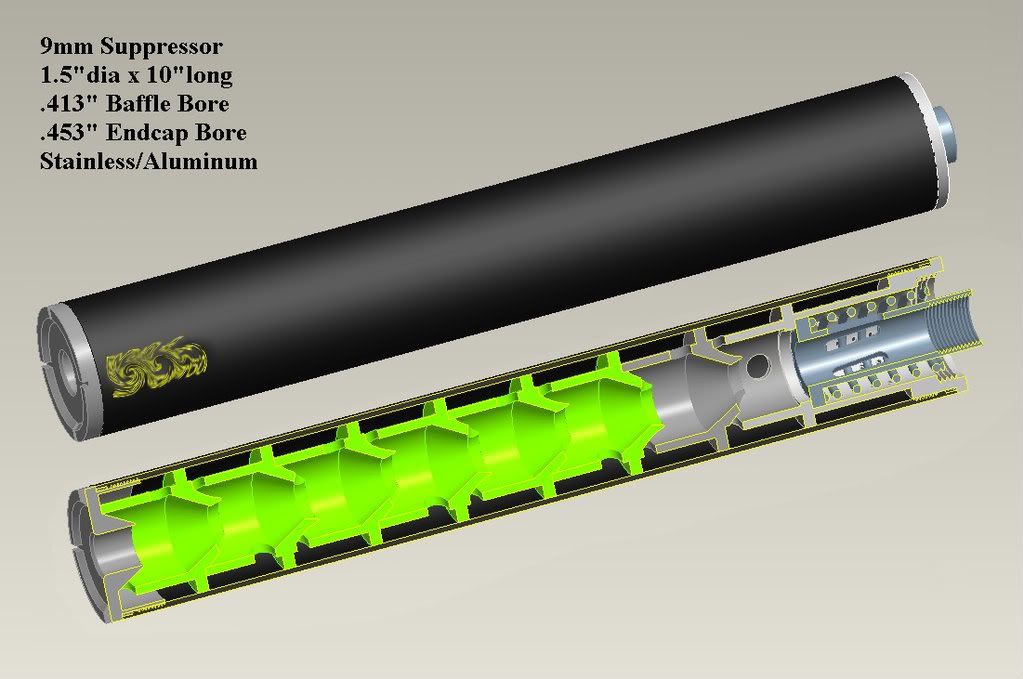
Well, I recently picked up a 9"x19" lathe to add to my assortment of necessary furniture. Yes... furniture. Couches and bedsets can wait - my workshop will be the first furnished room in my house. I'm looking into getting a small worksop going in my basement and really only need a welder and bandsaw to finish covering the essentials (mill, lathe, bandsaw, grinder, drill, dremel, welder). I'd like to be self sufficient person as much as can be. Some of the first items on my agenda are finishing/improving my homemade spool valve paintball gun, being able to do more work better for guys on AO/PBN, and a making a few silencers (I figure I can just save $$$ instead of purchasing them).
So I'm a bit of a newb when it comes to welding. Seen it done a bunch, laid a few (ugly) beads myself, and have a grasp on the basic concepts. I don't see myself ever needing more than 3/16" of penetration. I'll mostly be doing .050" and .125" thick parts and tubing. Mostly stainless - rarely regular steel. Possibly aluminum if I get good. I don't mind cleaning up unsightly MIG/arc welds so I'm not sure the complexity of TIG suits me - I just want accurate strong welds. I'm looking at some smaller Harbor Frieght models because they are local to me and fit the budget.
90amp 115V Flux-Wire Welder $130 - is this really as good as MIG welding? Seems like a glorified arc welder to me.
130/90amp 220V TIG/Arc combo welder $290 - Now we're talking. Pricey, but seems very useful.
30-140amp 110/220V Arc Welder (Refurbished) $80 - Simple brute force welding.
100amp 220V Wire Flux and MIG welder (Refurbished) $150 - Now this seems like a nice all around choice. Wire flux for simplicity and MIG for a bit more class.
Will I need more powerful welders for what I want to do?
One of my concerns is that my electric box in the house is only 100amp (very recently rewired) and the house is older (mid 1940's).
Will this be a problem? Many of these welders push 90-100+ amps
What works best - 115V or 220V? Does it matter?
Is a different welding setup needed for aluminum? I've never welded aluminum.
Am I better off served by just taking parts to a welder to have done? What is the cost of having a welder do stuff for me?
Any good sites on learning to weld good?
So I'm a bit of a newb when it comes to welding. Seen it done a bunch, laid a few (ugly) beads myself, and have a grasp on the basic concepts. I don't see myself ever needing more than 3/16" of penetration. I'll mostly be doing .050" and .125" thick parts and tubing. Mostly stainless - rarely regular steel. Possibly aluminum if I get good. I don't mind cleaning up unsightly MIG/arc welds so I'm not sure the complexity of TIG suits me - I just want accurate strong welds. I'm looking at some smaller Harbor Frieght models because they are local to me and fit the budget.
90amp 115V Flux-Wire Welder $130 - is this really as good as MIG welding? Seems like a glorified arc welder to me.
130/90amp 220V TIG/Arc combo welder $290 - Now we're talking. Pricey, but seems very useful.
30-140amp 110/220V Arc Welder (Refurbished) $80 - Simple brute force welding.
100amp 220V Wire Flux and MIG welder (Refurbished) $150 - Now this seems like a nice all around choice. Wire flux for simplicity and MIG for a bit more class.
Will I need more powerful welders for what I want to do?
One of my concerns is that my electric box in the house is only 100amp (very recently rewired) and the house is older (mid 1940's).
Will this be a problem? Many of these welders push 90-100+ amps
What works best - 115V or 220V? Does it matter?
Is a different welding setup needed for aluminum? I've never welded aluminum.
Am I better off served by just taking parts to a welder to have done? What is the cost of having a welder do stuff for me?
Any good sites on learning to weld good?






Comment