
For the record the plunger is shortened by 0.0714"
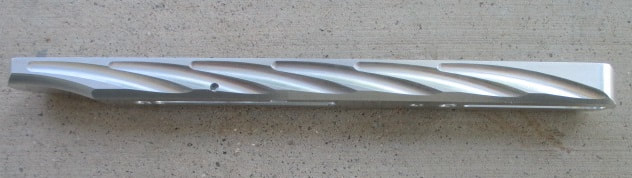
The following list is what dictates the operating specifications of an Automag rail. It does NOT matter what the platform is, Automag, RTP or Emag.
1. Thumb and front grip frame screw, size and spacing.
2. Valve lock groove, location, width and depth (If the rail has one)
3. Recess body mount cavity. Location, depth and width.
4. Twist lock pin, location and size.
5. Foregrip mount provisions
6. Rail bushing compatible
7. Sear pin size and location. Dimensions must be based off the thumb and front screw holes. Height based off the bottom of the body.
8. Proper size cavity for the body to sit in.
The Emag solenoid has it own operating spec independent of the rail. Proper spacing between the sear pin and solenoid body is achieved by adjusting the plunger.
This is the very definition of modular. Adjusting the plunger in no way disqualifies it from that designation.
I'm still trying to figure out what you're trying to get out of this argument?
The following list is what dictates the operating specifications of an Automag rail. It does NOT matter what the platform is, Automag, RTP or Emag.
1. Thumb and front grip frame screw, size and spacing.
2. Valve lock groove, location, width and depth (If the rail has one)
3. Recess body mount cavity. Location, depth and width.
4. Twist lock pin, location and size.
5. Foregrip mount provisions
6. Rail bushing compatible
7. Sear pin size and location. Dimensions must be based off the thumb and front screw holes. Height based off the bottom of the body.
8. Proper size cavity for the body to sit in.
The Emag solenoid has it own operating spec independent of the rail. Proper spacing between the sear pin and solenoid body is achieved by adjusting the plunger.
This is the very definition of modular. Adjusting the plunger in no way disqualifies it from that designation.
I'm still trying to figure out what you're trying to get out of this argument?



Comment