AO: We are back from the dead... again! After an 18 day outage, we are finally alive and well. Who knew how complicated updating software/databases from 2008 would be. I still have alot of tweaks to make, but my main goal was getting everything patched and updated to 2026.
Vbulletin 6 has changed alot since 2008 so we will have a ton of new features to dig into.
Would someone kindly take a micromag body/rail unit, sans feedneck if possible, throw it on a scale and weigh it? (Photo would be nice so we can verify what you're taking a photo of). It should come in around 13-14oz?
I'm going to smear my responses out over a series of posts instead of making one big one.
So... PTP went *backwards* in weight savings with the MM2K and beyond.
Micromags were "ULE before ULE". But was that really "revolutionary"? (Should we rebadge the MM2K's as "UHE"?)
Let's pretend to be technical people for a few minutes.
Classic SS body is about 7-8oz, give or take. The maximum you can do is cut that about in half by switching to aluminum because of the difference in density. So you maybe save 4oz at most in the body; reality is those bodies have extra material in them in various places so it's not an even trade.
(By the way I penned this part before seeing Maggot's pics. Thank you for the pics. Turns out, yeah, you save a little less than 4oz between top pic and bottom pic.)
However, they fused the rail to the body as well. When you fuse the rail to the body, you lose the ability to shed weight in the rail (as far as I can tell). Stock mag rail is 4.5oz, already in aluminum.
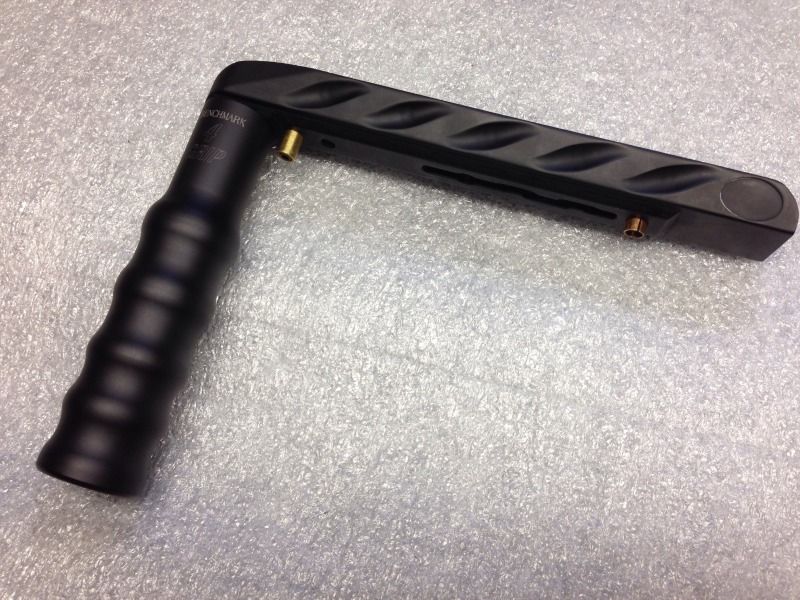
This is a problem for the "weight savings" argument, because we already know you can make a 1oz rail, in either aluminum or plastic.
That's the plastic version. Full Trracer top rail adds 1.5oz can can be trimmed to 0.5oz, which puts that setup at parity with the middle pic.
Essentially, all the trouble and effort put into making a lightened mag body? That coudn't produce a win against a heavy stainless body and a lightened rail. That's just bad design.
Considering cocker threads and fixed detents are only 10g of plastic away, the only thing you gained was the ability to anodize.
The fact that history bent this way instead of the other way was a matter of random chance. So some of us have a less rosy view of "historical significance". I think this stuff took us backwards for a few decades.
Yeah, its easy to reflect on history and play around with numbers to arrive at the conclusion you want. However, I don't recall seeing "back in the day" anyone milling rails or providing anything but the stock rail to the public. The offerings of rail alternatives and milled rails is something of a new offering, say within the last ten years...give or take a couple of years.
When PTP was doing its thing, no one was offering milled rails so indeed, they offered a lighter alternative. Not to mention a much cooler one...if you want subjective analysis on the matter!
If the unibody design "took us back" then why was the Xmag, one of the final innovations and probably the greatest AGD product - easily the most desirable now - a unibody?
In a world where lighter = better (which is not my opinion) consider not just that the marker itself was lighter, but how much weight is shed by going from a twistlock barrel with a huge haft to an autococker threaded barrel. I would point out that at the time PTP landed on 'cocker threading, "high-end" markers were all trying to establish their thread pattern as the superior one and would go on to do so until the late 1990s. PTP accurately predicted Autococker threading as being the best choice years before it became the standard, or at least took a gamble on it and won, which is surprising considering that it's such an illogical thread pattern (even Bud Orr will admit that; it was just a tap that he had on hand, or something).
As for the other merits, it definitely makes the marker much easier to assembly and disassemble. The later generations with the "wing" over the valve to me made it easier to install and uninstall, and the site rail was much less complicated than those on the RT and RT Pros - definitely better than the slipon/screwdown ones for the classic bodies, and you'll note that the Xmag had the same feature. The detents offered throughout the 90s were wire which had the potential to be a nightmare (rusting, bending, slicing paint, etc) and the unibody allowed for a better (at the time) system to be used - plastic nubbins didn't come from AGD until much later.
It's VERY easy to look back at things that happened 25+ years ago and say that they're unimportant, or not revolutionary, but you have to have some perspective and apparently that's only gained by having been there at the time, or putting some serious thought into what changed and when. In a world where 3D printers exist, Chinese manufacturing is cheap and readily available (since the trade agreement), the internet provides a marketplace for the easy purchase of parts, upgrades and services (including anodizing and milling) as well as free tech and service references on forums and youtube videos OF COURSE these older don't stack up to today's standards. However, in a world where markers were purchased at fields or out of catalogs, upgrades the same, and "tech references" were in the form of photocopy manuals and mail-order VHS tapes, or the advice of another player given in person, a fully upgraded marker with brand new features which made maintenance and play easier/better was a big deal. It's a matter of perspective, and looking at how things developed from the BEGINNING forward, not the END back.
For comparison - look at an early 60's Cadillac with an automatic transmission... Loud, clunky, inefficient compared to today's cars, with seatbelts as an "option" and no airbags. However, they had one of the most revolutionary, bulletproof and low maintenance automatic transmissions ever made, setting the standard going forward - and the cars looked cool, too. Do we tell owners and enthusiasts of classic Caddies that because the Northstar motor was a piece of crap 30 years later that their 1964 is junk? Or complain about how a modern CVT is so much more efficient, or a standard might serve you better in a race?
Yeah, its easy to reflect on history and play around with numbers to arrive at the conclusion you want. However, I don't recall seeing "back in the day" anyone milling rails or providing anything but the stock rail to the public. The offerings of rail alternatives and milled rails is something of a new offering, say within the last ten years...give or take a couple of years.
When PTP was doing its thing, no one was offering milled rails so indeed, they offered a lighter alternative. Not to mention a much cooler one...if you want subjective analysis on the matter!
Exactly.
I do want to correct one thing though, before Eclipse came out with the final generation of splash kit that had milled rails, I can only think of one other company who produced a nicely milled Mag rail... PTP/Benchmark
About 2 years ago I started on a mission to own every gun and product that PTP ever made. I came pretty close...
Me too... I have seven MicroMags, one of each generation and an extra Gen 2. My Micromag 2000 is a Micro eMag. I also have a Sleeper Cocker, PTSC2, Armson Rifle, Armson Semi, VMX, and a BeamHits LMTS. I am missing the microCocker, but one will come up eventually.
Needless to say, I'm a fan of PTP products....
I can understand why some are not fans, but each to their own....
Walker
O.F.P.P.A. - OLD FARTS PAINTBALL PLAYERS ASSOCIATION
When you wrap-up the day with beer and Bengay.
If the unibody design "took us back" then why was the Xmag, one of the final innovations and probably the greatest AGD product - easily the most desirable now - a unibody?
I surmise that the unibody was not necessarily choosen(though the next time i see Simon, i can ask) because of simplicity, but for the fact that with the inclusion the eyeboard and the reflective eye, this could not be done very well at the time.
Originally posted by Frizzle Fry
In a world where lighter = better (which is not my opinion) consider not just that the marker itself was lighter, but how much weight is shed by going from a twistlock barrel with a huge haft to an autococker threaded barrel. I would point out that at the time PTP landed on 'cocker threading, "high-end" markers were all trying to establish their thread pattern as the superior one and would go on to do so until the late 1990s. PTP accurately predicted Autococker threading as being the best choice years before it became the standard, or at least took a gamble on it and won, which is surprising considering that it's such an illogical thread pattern (even Bud Orr will admit that; it was just a tap that he had on hand, or something).
The barrel threads was NOT an accurate prediction, it was necessary to be cheap. Here is why. Ptp is a small shop, small shops can't always afford all the tap and dies to make the parts. If PTP were making their own bodies and not using slugs from WGP, then they would need to thread the barrels for them. It is easier for a secondary shop to choose one threading for their line versus a new or even a different thread from a specific gun(putting Shocker threads on a cocker). So if you were to go after the cocker crowd, who already has cocker barrels. It makes sense to use them.
This choice was made by nearly everyone who didn't make barrels, if they made guns. Looking at AKA, they targeted the spyder crowd with spyder specific parts and bodies. It makes no sense to give a spyder body with ICD threads.
It has only become defacto to cocker threads being standard.
Originally posted by Frizzle Fry
As for the other merits, it definitely makes the marker much easier to assembly and disassemble. The later generations with the "wing" over the valve to me made it easier to install and uninstall, and the site rail was much less complicated than those on the RT and RT Pros - definitely better than the slipon/screwdown ones for the classic bodies, and you'll note that the Xmag had the same feature. The detents offered throughout the 90s were wire which had the potential to be a nightmare (rusting, bending, slicing paint, etc) and the unibody allowed for a better (at the time) system to be used - plastic nubbins didn't come from AGD until much later.
Just because they eliminated the possible problem, does not make it the best choice. The plastic nubbins are so much better than the wire. I know if i had a plastic nubbin, it would have saved 1 barrel of mine. But as we all know, the Mag was ahead of its time. Only when the L10 was introduced was the Mag able to reach its full potential without the snear or talk of the gun being a "paint blender".n do not confuse innovation with doing things differently.
Originally posted by Frizzle Fry
It's VERY easy to look back at things that happened 25+ years ago and say that they're unimportant, or not revolutionary, but you have to have some perspective and apparently that's only gained by having been there at the time, or putting some serious thought into what changed and when. In a world where 3D printers exist, Chinese manufacturing is cheap and readily available (since the trade agreement), the internet provides a marketplace for the easy purchase of parts, upgrades and services (including anodizing and milling) as well as free tech and service references on forums and youtube videos OF COURSE these older don't stack up to today's standards. However, in a world where markers were purchased at fields or out of catalogs, upgrades the same, and "tech references" were in the form of photocopy manuals and mail-order VHS tapes, or the advice of another player given in person, a fully upgraded marker with brand new features which made maintenance and play easier/better was a big deal. It's a matter of perspective, and looking at how things developed from the BEGINNING forward, not the END back.
True. The early part houses did do a lot for the player, taking up the questions that are later being answered on the internet. Experience always dictates what works, what people liked and so forth.
I will say this. You are beating the PTP flag extremely well. I believe you have got some facts wrong and are trying to puff up the brand, as you think it deserves. I am one that doesn't care. Rare does one not like the way a gun looks and still use it.
The barrel threads was NOT an accurate prediction, it was necessary to be cheap. Here is why. Ptp is a small shop, small shops can't always afford all the tap and dies to make the parts. If PTP were making their own bodies and not using slugs from WGP, then they would need to thread the barrels for them. It is easier for a secondary shop to choose one threading for their line versus a new or even a different thread from a specific gun(putting Shocker threads on a cocker). So if you were to go after the cocker crowd, who already has cocker barrels. It makes sense to use them.
This choice was made by nearly everyone who didn't make barrels, if they made guns. Looking at AKA, they targeted the spyder crowd with spyder specific parts and bodies. It makes no sense to give a spyder body with ICD threads.
But PTP did make barrels... and they made them for ICD, Spyder, F1s, VM68s, Prolites, Sovereigns and many others - it wasn't "cheap-out" to them. Bud Orr made the choice to thread his cockers based on either having the tap on hand, or being able to buy it locally, or something - I don't remember the exact story but that's why it's such a goofy thread. Many other companies were pushing their own style of barrel attachment, thread patterns and otherwise, and for whatever reason PTP elected to use the type of threading that would go on to become standard but not until many years later despite having the tooling to utilize any thread pattern on the market. A few tap and die sets aren't much of an expense when you have millions of dollars worth of machinery in your shop.
They weren't a "small shop" either - they were massive compared to the competition at the time, which is part of my point... if you look at a majority of custom guns from the era when PTP started you'll see a lot of simple, raw cuts, and a mishmash of aftermarket parts used on their markers. PTP made everything from the frames to the barrels to the feednecks to the velocity adjusters and bolts in house; the markers came fully upgraded and uniformly finished. Sure, BBT and Carter caught on and did the same but they still had a less uniform product line until years later, an a higher pricepoint.
Originally posted by Nobody
Just because they eliminated the possible problem, does not make it the best choice. The plastic nubbins are so much better than the wire.
I'm not saying that it's the best choice now, but it was then... they saw a problem and created a new solution. That's the definition of innovation.
Mags had inferior detents (evidenced by the fact that they changed the design, albeit much later) so PTP made a better detent system. Autocockers had NO detent whatsoever, and custom shops were sticking the same wire detents on them that mags were using... PTPs design was superior to that, as well - even to early thread-in ball detents ("cocker detents") which were often mismeasured when done as a custom job, because PTPs could be adjusted forward and back by trimming the delrin finger. Has their detent been surpassed by several others since then? Sure. Doesn't change that it was innovative at the time.
Originally posted by Nobody
I will say this. You are beating the PTP flag extremely well. I believe you have got some facts wrong and are trying to puff up the brand, as you think it deserves.
I'd love to know what I've got wrong... PTP may have screwed up their products and customer service in recent years, but to anyone who was there and playing in the early and mid 90s it's undeniable that they were innovators in the field, were well ahead of their time with many of their products, and that they played a big part in the growth of the Automag platform almost from the start. I'd love to hear what Tom has to say on the subject, at least with regards to automags... As for 'cockers, creating the first production halfblock has to mean something, as does adding a functional factory detent system.


Comment